

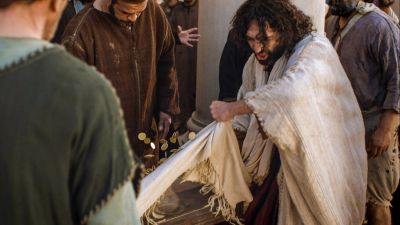
Jesus has just angered everyone in religious and political power. He has caused a riot in the Temple as people were getting ready for the big national celebration of Passover. Jesus' turning over tables, scattering money, and setting caged animals free was irresponsible anywhere. To do it in the Temple was incendiary, bordering on revolutionary. Such action was dangerous. What was Jesus thinking? What would happen to their Temple-based economy? What would the Romans think about this and do in response?
The religious and political leaders had repeatedly tried to discredit Jesus and trap Him in legal questions and technicalities. Instead, Jesus had embarrassed them with His answers and His mocking questions in reply. He has the audacity to call them out, labeling them hypocrites, moneygrubbers, show offs, abusive religious frauds, and snakes.
Jesus' strong words to the teachers of the Law and the Pharisees during His last trip to Jerusalem are strong enough to peel the bark of a hardwood tree (Matthew 23:1-39). I have looked at Jesus' blast of righteous anger aimed at the heart of the religious leaders from several angles.
- I've had folks take these critical statements of Jesus and turn them around and say what the opposite of them would look like. Those make for pretty good leadership principles.
- I've separated the key statements and tied them to other passages in Scripture to show how these problems that Jesus confronts are often the haunts that demons inhabit in religious structures.
- I've talked about the Pharisees and their noble desire to honor God with holy lives, yet reminded people how easily we sink into a legalistic institutionalism that suffocates grace, abuses people, and causes those in power to lose their soul.
Today, however, I want to focus on just one of the statements that Jesus made:
[Jesus said] "They tie up heavy, cumbersome loads and put them on other people's shoulders, but they themselves are not willing to lift a finger to move them" (Matthew 23:4).
Jesus' words haunt me. They sound remarkably similar to the charges often made today by critics of organized church:
- They don't practice what they preach!
- They weigh people down with burdens and unnecessary rules!
- They don't do anything to help people with their real life problems!
To put it in cornbread English, most folks view Christians as overly critical, unhelpful, hypocrites.
We can quarrel all we want about the misperceptions. We can grow frustrated and cynical ourselves with those who have betrayed Jesus and the church by their abuses of power. Bottom line, however, as followers of Jesus, we have the power to do something about this.
To make this change, we don't have to surrender our commitment to the moral call of God. Neither do we have to give up our commitment to Scripture or truth or faithfulness. But to make this change, we MUST help folks lift the burdens they face. We must be about doing good and sharing God's love and grace in practical ways.
As churches and as followers of Jesus, we are entering a situation unprecedented in most of our lifetimes. Mounting struggles, disorientation, fragmentation, unemployment, retirement concerns, and fear are seeping in around us like a river slowly swelling past it banks. So what will we DO to help?
Jesus tells us what He doesn't want us to be. He says these words knowing that they will incite His enemies and galvanize those determined to kill Him. But He says them anyway to them and to us as a warning:
"They tie up heavy, cumbersome loads and put them on other people's shoulders, but they themselves are not willing to lift a finger to move them" (Matthew 23:4).
Instead of being like those religious leaders, Jesus wants us to be like Him.
Take a look at the Gospels (Matthew, Mark, Luke, and John) and see how He was with people. Notice those with whom He associated - it is kind of hard to find someone He wouldn't spend time with if they wanted to be around Him, isn't it! Notice how He lived among them, heard their cries, saw their pain, and lifted their burdens. And now, He calls to us and asks us to be His Body, His presence in the world. When we gather around His table and take the bread, we are not only remembering His body on the cross, but we are His bodily presence in the world today (1 Corinthians 11:16-17). Will we continue to do for others what He did when He was physically present?
Jesus was the opposite of those who gave folks heavy burdens and refused to help them carry those burdens. And now, in times like ours, we have to decide. He allows us no middle ground. We have to choose: Is He Savior or charlatan, Messiah or maniac, Lord or liar.
And if we decide that Jesus is our hero, we are going to live with others and for others like He did! And as we do, the Lord has given us this promise: "As you serve others in My name, you are serving me" (Matthew 25:40, loose paraphrase). Jesus becomes real to others through our actions. Jesus becomes real to us through the people we serve.
LIFE Questions and Blog Responses:
Do you think the three things listed above are really how most non-believers see church goers? (That they are hypocrites who lay burdens and guilt trips on people and don't do much to help the brokenness in the world.)
Why do you think they believe this about believers?
Do you think this is a fair estimation of how religious people are portrayed today?
What can you do to change people's impressions of Jesus' followers today?
What is one specific thing your church or small group or group of friends do to help serve the broken in your community?
What is one specific thing you could do to help serve those with whom you work, go to school, or meet in daily life?
What are things that Christ followers you know are doing today to serve the community around them? (This is to help share ideas with other believers of things we can do to help today!)
Special Notes:
* You may quarrel with the conclusions, but take a look at the following books for a sobering reminder of how Christians are perceived in today's culture: UnChristian and They Like Jesus But Not the Church.







 Bible: Browse OT/NT Books
Comments
Have thoughts on this article? Leave a comment